
Should You Take a Loan From Your TSP?
Borrowing from your future may feel convenient today, which means you must understand what it truly costs.

TSP loans are marketed as borrowing from yourself, which sounds harmless at first. Because the interest goes back into your account, many soldiers assume there is no real downside. That belief is incomplete. Money removed from the market stops compounding immediately. Compounding does not pause politely. It keeps moving without you. This is where small decisions create long-term consequences.
Disclosure:
This article is for educational purposes only and is not financial advice. Always do your own research or speak with a licensed advisor before making investment decisions.
Why a TSP Loan Feels Safer Than It Actually Is
You are removing capital from compounding. Even though you repay yourself with interest, the funds are no longer invested while the loan is outstanding, which means you miss market growth during that period. If markets rise while your money is out, the opportunity cost can exceed the interest you pay yourself. That gap compounds over time. The loss is invisible. Invisible costs are still real.
Repayment reduces monthly flexibility. Loan payments come directly from your paycheck, which means take-home pay shrinks during repayment. That pressure can reduce investing elsewhere. Reduced investing slows long-term growth. What feels manageable today can tighten later. Structure must account for that.
Separation risk complicates repayment. If you leave service before the loan is repaid, remaining balances may become taxable distributions because repayment rules change. That unexpected tax event can create additional strain. Planning must include worst-case scenarios. Not just best-case optimism.
Behavioral patterns matter. Taking one TSP loan can normalize borrowing from retirement savings, which means it becomes an easy solution next time. Even though the first use feels justified, repeated access damages long-term structure. Habits scale. That is the deeper risk.
When a TSP Loan Might Be Reasonable
Avoiding high-interest debt. If the alternative is double-digit credit card interest, a structured TSP loan may reduce overall financial damage because the interest rate is typically lower. Even then, it should be temporary and strategic. Replacement plans must exist. Not just hope.
Handling short-term liquidity gaps. Unexpected emergencies can require fast capital, which means options may be limited. If liquidity through 🏦 Banks Hub accounts or savings buffers is insufficient, a short-term loan might stabilize the situation. Stability comes first. Growth comes second.
Preventing forced asset liquidation elsewhere. Selling long-term investments during a downturn can lock in losses, which means a structured internal loan may sometimes protect other compounding assets. Context determines wisdom. Blanket rules rarely fit every situation.
With a defined repayment acceleration plan. If you commit to aggressive repayment rather than minimum terms, the time out of market shrinks. Shorter disruption reduces opportunity cost. Discipline must be clear and documented.
How This Decision Connects to Long-Term Wealth
Pulling money from retirement weakens the 56K Plan foundation if done early in your career. Early capital is fragile and powerful at the same time, which means removing it interrupts compounding at its most sensitive stage. Protection matters most early.
Long interruptions slow the $3 Million Timeline significantly. Compounding depends on uninterrupted growth, which means multi-year loans create gaps in your curve. Those gaps widen over decades. Time cannot be replaced later.
Liquidity planning reduces the need for retirement borrowing. Strong savings habits through 📈 Investing Hub balance and accessible accounts lower the likelihood of tapping TSP. Prevention is better than repair.
Retirement accounts should be last-resort capital. They represent future freedom. Using them casually reduces long-term optionality. Optionality is the goal.
Common TSP Loan Mistakes
Borrowing for lifestyle upgrades.
Extending repayment terms unnecessarily.
Ignoring tax implications at separation.
Treating TSP as a convenient backup fund.
Why This Matters Long Term
Compounding requires uninterrupted time. Removing capital pauses exponential growth.
Retirement security depends on discipline. Borrowing casually weakens future flexibility.
Liquidity planning prevents reactive borrowing. Strong cash reserves reduce desperation decisions.
Small early disruptions scale over decades. What feels minor now compounds later.
Practical ways to avoid needing a TSP loan
Build a three-to-six-month emergency fund before increasing discretionary spending.
Reduce recurring debt payments aggressively early in your career.
Evaluate alternative financing structures before touching retirement accounts.
Create a written decision rule that limits retirement borrowing to true emergencies.
Final Word
A TSP loan is not free.
It is a trade. Immediate relief in exchange for delayed compounding. Sometimes trades are necessary. Often they are avoidable. The key is knowing the full cost before you decide.
Protect your future.
Plan your liquidity.
Build wealth while you serve.
Recommended Tools for Soldiers
🏦 Banks Hub – Strengthen liquidity and cash management systems to reduce reliance on retirement borrowing.
📈 Investing Hub – Focus on long-term growth strategies that compound uninterrupted over decades.
More to explore:
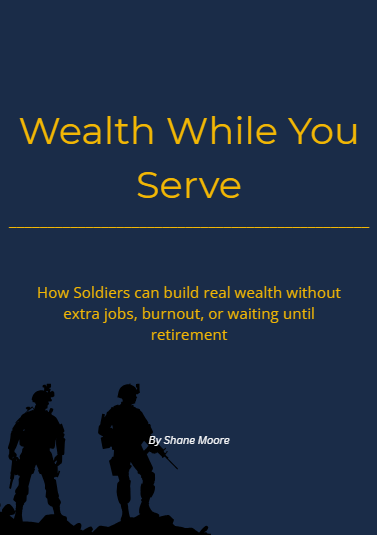
Ready to Start Building Wealth While You Serve?
Grab the free guide built for service members who want more than just survival mode. Whether you're in the barracks or deployed overseas, this is your first step toward real freedom.
Helping Soldiers Build Real Wealth While They Serve
We share practical tools, smart financial strategies, and military-friendly resources. Our goal is to help you stop just surviving and start building real freedom.

The information provided by Wealth While You Serve is for educational purposes only and does not constitute financial, legal, or tax advice. Always consult a qualified advisor before making financial decisions. Some links on this site are affiliate links, which means we may earn a small commission at no extra cost to you. This helps us continue offering free resources for military members and their families.
Created with ©systeme.io