
How to Build Wealth Even on a Junior Enlisted Salary
Small pay does not prevent wealth. Lack of structure does.

Most junior enlisted soldiers assume wealth begins after promotion, which sounds logical until you realize discipline scales faster than income. Because your early years often come with free housing, meals, and medical coverage, your expense structure is uniquely favorable compared to civilians. That advantage disappears later when rent, family costs, and lifestyle upgrades expand. This is your leverage window. If you ignore it, the math gets harder. That is where most soldiers miss their opportunity.
Disclosure:
This article is for educational purposes only and is not financial advice. Always do your own research or speak with a licensed advisor before making investment decisions.
Why Junior Enlisted Pay Is Not the Real Limiter
Income feels small, but expenses are smaller. An E-2 paycheck may look modest on paper, yet free barracks housing dramatically reduces required outflow because you are not paying market rent. When fixed costs stay low, even $300 to $500 per month becomes meaningful capital. That changes the equation quickly. Wealth is built from margin, not just income size. Margin is what junior soldiers actually have.
Time multiplies early contributions aggressively. Investing at 20 works differently than investing at 35 because compounding stretches across more years. A few hundred dollars per month may not look impressive today, but time transforms it into six figures before most civilians get serious. That is not hype. That is math. Early discipline creates disproportionate results.
Lifestyle inflation is the real threat. Promotions increase income, but spending often rises at the same pace because new purchases feel justified. Even though raises feel like progress, wealth does not grow if margin stays flat. Structure matters more than rank. That is where the mistake usually starts.
Perception creates delay. Many soldiers believe they need thousands per month to start investing, which means they wait. Waiting costs more than small beginnings. Starting with modest contributions builds identity as an investor. Identity drives consistency. Consistency drives outcomes.
The Structure That Builds Wealth on E-1 to E-4 Pay
Automate investing immediately. Allotments remove decision fatigue because money moves before temptation appears. Even $200 per month builds rhythm while preserving flexibility. Automatic structure prevents emotional spending. Discipline should not rely on daily motivation. Systems protect progress.
Take the TSP match, then prioritize accessible growth. Contribute at least enough to receive the full match because free money accelerates returns instantly. Beyond that, focus on brokerage investing so funds remain accessible before retirement age. This balance creates both growth and optionality. Long-term retirement accounts matter. Accessible capital matters too.
Build a three-to-six-month emergency reserve. Liquidity protects investments from forced sales during unexpected events because life rarely waits for ideal timing. Stability allows compounding to continue uninterrupted. Savings is not the goal, but it protects the goal. Foundation first, expansion second.
Control recurring expenses early. Phone plans, car payments, and subscription creep quietly consume margin. Even though single expenses feel small, recurring drains compound negatively over time. Audit them early while lifestyle remains simple. Prevention is easier than reversal.
How This Connects to the Bigger Wealth Plan
Early discipline powers the 56K Plan during your first enlistment. Saving and investing consistently during barracks years builds meaningful capital in three years because low expenses amplify every dollar saved. That early stack becomes your launchpad.
Consistent investing supports the $3 Million Timeline over a 20- to 30-year career. Compounding only works when money stays invested, which means junior enlisted years are not small. They are foundational. Starting late compresses the growth curve. Starting early stretches it.
Structure reduces stress as income rises. When habits are already formed, promotions expand wealth automatically rather than expanding lifestyle. That sequencing protects trajectory.
Confidence compounds alongside capital. Seeing early progress reinforces behavior, which makes long-term consistency sustainable. That feedback loop matters.
Common Myths About Junior Enlisted Wealth
“I’ll start when I make E-5.”
“Investing only works with big money.”
“I need a side hustle to build wealth.”
“Officers are the only ones who can invest seriously.”
Why This Matters Long Term
Early structure creates financial stability later in service. When wealth begins at E-2 or E-3, promotions amplify capital rather than restart the process.
Momentum builds faster than expected. Small monthly investments multiply because time does heavy lifting.
Optionality expands before retirement eligibility. Accessible capital creates flexibility in career decisions.
Stress decreases when systems are in place. Financial clarity improves performance in every other area.
Practical ways to build wealth on junior enlisted pay
Set a fixed investing percentage before your next paycheck arrives.
Increase contributions with every promotion rather than upgrading lifestyle first.
Avoid long auto loans that consume margin early in your career.
Review spending quarterly while still in the barracks to prevent creep.
Final Word
Junior enlisted pay is not a barrier.
Lack of structure is.
Your early years give you an advantage most civilians never have. Free housing. Steady pay. Predictable raises. Use it. Build systems now so promotions multiply wealth instead of expanding lifestyle.
Start small.
Stay consistent.
Build wealth while you serve.
Recommended Tools for Soldiers
💰 Budgeting Apps Hub – Track spending and protect margin so junior pay creates real investing power.
💳 Credit Cards Hub – Use disciplined credit strategies to build strong credit while avoiding high-interest traps.
More to explore:
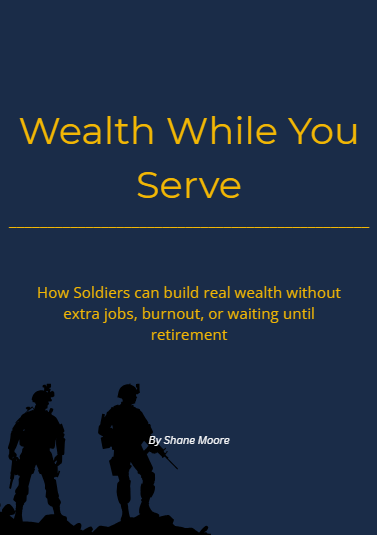
Ready to Start Building Wealth While You Serve?
Grab the free guide built for service members who want more than just survival mode. Whether you're in the barracks or deployed overseas, this is your first step toward real freedom.
Helping Soldiers Build Real Wealth While They Serve
We share practical tools, smart financial strategies, and military-friendly resources. Our goal is to help you stop just surviving and start building real freedom.

The information provided by Wealth While You Serve is for educational purposes only and does not constitute financial, legal, or tax advice. Always consult a qualified advisor before making financial decisions. Some links on this site are affiliate links, which means we may earn a small commission at no extra cost to you. This helps us continue offering free resources for military members and their families.
Created with ©systeme.io