
Should You Pay Off Student Loans Early as a Soldier
Know when paying them off helps and when it slows your growth

Student loans are one of the most common financial decisions soldiers face early in their careers.
The instinct is usually to pay them off as quickly as possible.
But depending on your situation, that decision can either strengthen your system or quietly slow your long-term progress.
Disclosure:
This article is for educational purposes only and is not financial advice. Always do your own research or speak with a licensed advisor before making investment decisions.
Why Paying Off Student Loans Early Feels Like the Right Move
It removes a financial obligation. Eliminating a loan reduces the number of payments you have to manage. Fewer obligations create simplicity. Simplicity reduces stress. Lower stress improves consistency. This is one of the biggest psychological benefits.
It guarantees a return equal to your interest rate. Paying off a loan eliminates interest. That means you are effectively earning a guaranteed return equal to that rate. Guaranteed returns feel safe. Safety is appealing early in your career.
It improves your monthly cash flow. Once the loan is gone, that payment is freed up. More available cash increases flexibility. Flexibility gives you more options. Options improve decision-making over time.
It creates a sense of financial progress. Paying down debt feels productive. That feeling can build momentum. Momentum improves consistency. Consistency drives long-term results. But emotional progress is not always the same as financial optimization, which is why understanding how to manage debt as a soldier helps you make better long-term decisions.
When Paying Off Student Loans Early Makes Sense
Your interest rate is high. Higher interest increases the cost of carrying the loan. Eliminating it reduces total cost significantly. This improves your financial efficiency. Better efficiency supports long-term growth.
You value simplicity over optimization. Some soldiers prefer fewer moving parts. Simplicity improves execution. Better execution improves consistency. Consistency leads to better results over time.
You already have a strong financial foundation. If you have savings, stable income, and a working system, paying off loans becomes a cleaner decision. A strong base supports faster payoff without risk.
You want to reduce risk and increase stability. Less debt reduces financial pressure. Lower pressure improves flexibility. Flexibility supports better decisions. Stability is valuable, especially early on.
When Paying Them Off Early Can Slow You Down
Your interest rate is relatively low. Low-interest debt is less urgent. Paying it off aggressively may not be the most efficient use of your money. That money could potentially grow more elsewhere.
You delay investing and lose compounding time. Investing early allows your money to grow over time. Delaying reduces that growth. Time is the most important factor in compounding. Losing time slows long-term results.
You reduce your financial flexibility. Putting all your extra money into loans leaves less available for opportunities or emergencies. Reduced flexibility limits your options. Options matter more than most soldiers realize.
You miss the opportunity to balance debt and growth. The most effective strategy is often a combination of both. Focusing only on one side can limit your overall progress.
How This Fits Into Your Long-Term Wealth Plan
The 56K Plan depends on early allocation decisions. Where your money goes early determines how quickly you build your base. Balanced allocation improves outcomes.
The $3 Million Timeline depends on compounding. The earlier you invest, the more powerful compounding becomes. Delays reduce long-term growth potential.
Your system should balance stability and growth. Eliminating all debt is not always necessary to move forward. Balance allows you to progress in multiple areas at once.
Flexibility is a key advantage early in your career. Decisions that reduce flexibility should be evaluated carefully. Maintaining flexibility supports better long-term decisions.
Practical ways to make the right decision
Evaluate your interest rate before deciding. This is a clarity strategy that helps determine urgency. Higher rates require faster action.
Split your strategy between payoff and investing. This is a balance strategy that allows progress in both areas. Balanced systems perform better long term.
Avoid putting all extra money into one area. This is a flexibility strategy that protects your options. Options improve decision-making.
Reassess your strategy as your income grows. This is an adjustment strategy that keeps your system aligned with your situation.
Focus on building a system that allows you to reduce debt while still investing consistently so your progress continues instead of pausing in one area.
Final Word
Paying off student loans early is not automatically the best move, even though it often feels like it. The real question is not whether you should eliminate the debt quickly, but whether that decision supports your overall system.
If paying off your loans helps you reduce high interest, simplify your finances, and improve stability, it can be the right move. But if it delays investing, reduces flexibility, or slows your long-term growth, it may not be the most effective strategy.
The goal is not just to eliminate debt, it is to build a system that balances stability and growth so you can continue building wealth while you serve.
Recommended Tools for Soldiers
📈 Investing Hub – Learn how to grow your money while managing debt effectively.
💰 Budgeting Apps Hub – Track your payments, savings, and overall financial progress.
More to explore:
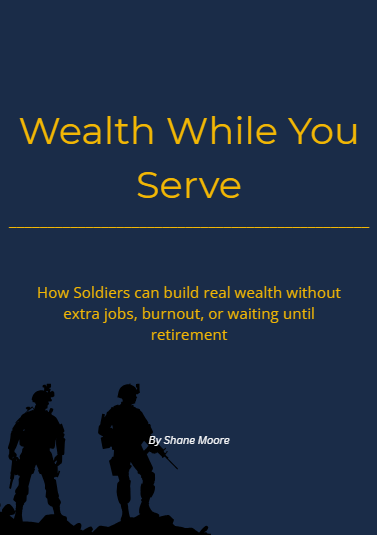
Ready to Start Building Wealth While You Serve?
Grab the free guide built for service members who want more than just survival mode. Whether you're in the barracks or deployed overseas, this is your first step toward real freedom.
Helping Soldiers Build Real Wealth While They Serve
We share practical tools, smart financial strategies, and military-friendly resources. Our goal is to help you stop just surviving and start building real freedom.

The information provided by Wealth While You Serve is for educational purposes only and does not constitute financial, legal, or tax advice. Always consult a qualified advisor before making financial decisions. Some links on this site are affiliate links, which means we may earn a small commission at no extra cost to you. This helps us continue offering free resources for military members and their families.
Created with ©systeme.io