
How to Plan Finances for Medical Separation
Build stability before your income changes, not after

Medical separation is not a normal transition.
It often happens faster than expected, with more uncertainty and fewer clear answers upfront.
That’s what makes the financial side so important. If you don’t plan early, things tighten up fast.
Disclosure:
This article is for educational purposes only and is not financial advice. Always do your own research or speak with a licensed advisor before making investment decisions.
Why Medical Separation Creates Financial Pressure
Your income structure is about to change. Active duty pay is predictable. Disability pay and civilian income are not always immediate or consistent. That gap creates pressure. And it happens fast. Using the 🏦 Banks Hub early helps you organize your accounts and cash flow so you can see exactly where you stand instead of guessing during a stressful transition.
Timelines are often unclear. The medical board process can move quickly or slowly depending on the situation. That uncertainty makes planning harder. Harder planning leads to reactive decisions. This is where most soldiers get caught off guard.
You may have ongoing medical costs or limitations. Your situation might affect your ability to work right away. That matters more than people expect. Reduced earning capacity changes your entire financial plan.
You don’t get the same runway as a standard ETS. Most soldiers have time to prepare for separation. Medical separation compresses that timeline. Less time means more risk, which is why understanding how to plan your finances for life after the military early keeps you from falling behind before you even transition.
The Financial Moves You Need to Make Early
Build a transition buffer as soon as possible. You need cash available before your income changes, because there will likely be a delay between pay systems. That delay can stretch longer than expected, which means relying on future income is risky. This is what catches most people. A buffer gives you breathing room.
Map out your expected income sources clearly. This includes VA disability, potential severance, and civilian income. You need a rough timeline for each, because gaps are common. If you don’t map it out, you assume everything lines up perfectly. It usually doesn’t.
Reduce fixed expenses before you separate. Lowering your monthly obligations gives you flexibility, because your income may not be stable right away. This helps you stay in control even if things take longer than planned. High fixed costs are what create pressure.
Avoid taking on new financial commitments. New debt or large purchases increase risk, which means less flexibility when your income changes. This is where things go sideways for a lot of soldiers. Stability matters more than upgrades right now.
The Mistakes That Create Long-Term Problems
Waiting until the process is finalized to plan. By the time everything is official, your timeline is already tight. That’s too late. Planning has to happen early. This is where most people fall behind.
Assuming disability pay will cover everything immediately. There can be delays. Even small delays matter, because bills don’t wait. That gap creates stress fast.
Not adjusting your lifestyle before separation. If your expenses stay the same but your income drops, your system breaks. That’s the reality. Adjusting early prevents that.
Overestimating how quickly civilian income will start. Job timelines vary. Offers take time. Start dates get pushed. That uncertainty needs to be accounted for.
How This Fits Into Your Long-Term Wealth Plan
The 56K Plan depends on protecting your base during transitions. If your foundation gets hit during separation, everything slows down. That’s why stability matters here more than growth.
The $3 Million Timeline depends on staying consistent through disruptions. Transitions are where most people lose momentum. Momentum is everything long term.
Your system needs to survive change, not just normal conditions. It’s easy to stay consistent when everything is predictable. This is where your system gets tested.
Control matters more than optimization during this phase. You’re not trying to maximize returns right now. You’re trying to stay stable.
Practical ways to stay financially stable during medical separation
Track every expense leading into your transition. This helps you understand your real baseline, because assumptions are usually wrong. That clarity matters.
Build at least a few months of expenses in cash. This gives you flexibility, which means you’re not forced into bad decisions. That’s the difference.
Use the 🪙 High-Yield Savings Hub early to store your transition funds so they stay accessible while still growing and are separated from daily spending habits This keeps your buffer intact, because mixing it with spending money leads to leaks. And it happens fast.
Start preparing for civilian income before separation. This reduces delays, because waiting until after separation pushes everything back. That’s time you don’t have.
Treat this transition as a stability phase so your system holds together instead of forcing you to rebuild under pressure later.
Final Word
Medical separation is one of the few transitions where things can change quickly and without much warning, which is why waiting to figure things out later usually creates more stress than it solves. The financial side doesn’t fix itself, and small gaps turn into real problems if you’re not prepared.
If you focus on building a buffer, lowering your obligations, and understanding your income timeline early, you give yourself room to adjust without pressure. That space is what allows you to make better decisions instead of reacting to whatever happens next.
The soldiers who handle this transition well are not the ones who had perfect conditions. They’re the ones who prepared early, stayed disciplined, and made sure their system could handle uncertainty without falling apart.
Recommended Tools for Soldiers
💰 Budgeting Apps Hub – Track your expenses and maintain control during transition.
🧠 Credit Monitoring Hub – Stay aware of your financial position while your situation changes.
More to explore:
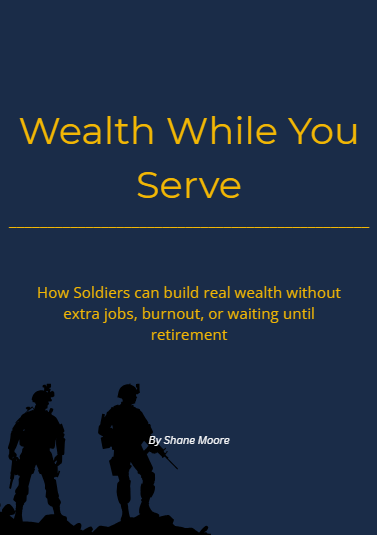
Ready to Start Building Wealth While You Serve?
Grab the free guide built for service members who want more than just survival mode. Whether you're in the barracks or deployed overseas, this is your first step toward real freedom.
Helping Soldiers Build Real Wealth While They Serve
We share practical tools, smart financial strategies, and military-friendly resources. Our goal is to help you stop just surviving and start building real freedom.

The information provided by Wealth While You Serve is for educational purposes only and does not constitute financial, legal, or tax advice. Always consult a qualified advisor before making financial decisions. Some links on this site are affiliate links, which means we may earn a small commission at no extra cost to you. This helps us continue offering free resources for military members and their families.
Created with ©systeme.io