
How to Plan Financially for Life After Active Duty
The transition out of active duty is predictable on paper, yet financially disruptive in practice because multiple changes hit at once.

Pay structure shifts. Benefits change. New expenses appear quickly. Because several moving pieces overlap, soldiers who do not plan early feel rushed at the worst possible time. Planning financially for life after active duty is not about guessing outcomes. It is about creating margin before uncertainty arrives.
Disclosure:
This article is for educational purposes only and is not financial advice. Always do your own research or speak with a licensed advisor before making investment decisions.
Why the Transition Creates Financial Stress
Income changes faster than most expect. Base pay stops immediately. Civilian pay often lags behind separation. Because gaps feel longer when savings are thin, stress builds quickly. This is where anxiety spikes. That’s where most soldiers get tripped up.
Benefits do not translate cleanly. Health care, housing allowances, and tax advantages shift. Even though replacements exist, timing matters. Because benefits overlap imperfectly, costs feel sudden. This catches families off guard.
New expenses appear all at once. Insurance premiums, housing deposits, and commuting costs add up. Soldiers underestimate these startup costs. Because the transition compresses decisions, mistakes get expensive fast. This is where preparation matters most.
Identity and income change simultaneously. Career uncertainty affects confidence. Financial uncertainty magnifies that stress. Because emotion influences money decisions, poor timing leads to poor choices. This combination is powerful.
How Disciplined Soldiers Prepare Financially Before ETS
They build a dedicated transition buffer. Savings are labeled for post-service use. This separation prevents accidental spending. Because buffers create breathing room, decisions improve. This is where calm replaces urgency.
They model post-military cash flow early. Civilian income is estimated conservatively. Expenses are adjusted realistically. Even though estimates are imperfect, clarity increases control. This planning reduces surprises.
They time major decisions intentionally. Housing, vehicles, and education are sequenced carefully. Nothing major happens during peak uncertainty. Because timing reduces risk, patience protects outcomes. This is where discipline shows.
They protect long-term investing during transition. Contributions are adjusted, not abandoned. Momentum stays alive. This balance keeps future goals intact.
Common Financial Transition Mistakes Soldiers Make
Waiting until the last months to plan. Margin disappears.
Assuming benefits replace themselves seamlessly. Gaps hurt.
Draining savings before income stabilizes. Stress compounds.
Making major purchases too early. Flexibility vanishes.
Why This Matters Long Term
Strong transitions protect early momentum. Planning preserves the 56K Plan through change.
Avoiding disruption supports compounding. Consistency reinforces the $3 Million Timeline.
Stress stays lower. Decisions feel controlled.
Freedom increases. Options stay open after service.
Practical ways to prepare financially for life after active duty
Build a labeled transition fund. Clarity matters.
Model conservative post-service income. Realism protects stability.
Delay major purchases until income stabilizes. Timing reduces risk.
Keep investing at a sustainable level. Momentum matters.
Final Word
Leaving active duty does not have to feel financially chaotic.
Soldiers who plan early, protect cash flow, and sequence decisions intentionally move through transition with confidence instead of pressure. The goal is not perfection. It is stability first, then growth.
Create margin early.
Move deliberately.
Build wealth while you serve.
Recommended Tools for Soldiers
🏠 VA Loans Hub
Understanding VA loan options helps soldiers plan housing decisions before and after leaving active duty.
📈 Investing Hub
Simple investing tools allow soldiers to maintain long-term progress even during income transitions.
More to explore:
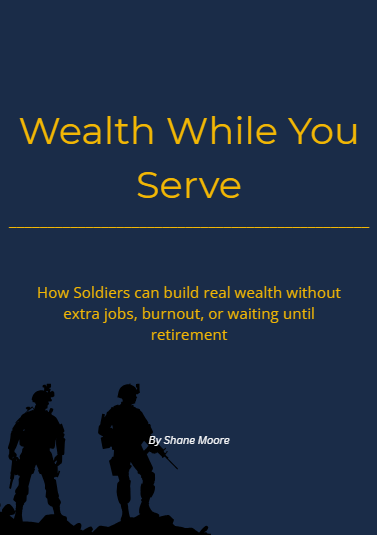
Ready to Start Building Wealth While You Serve?
Grab the free guide built for service members who want more than just survival mode. Whether you're in the barracks or deployed overseas, this is your first step toward real freedom.
Helping Soldiers Build Real Wealth While They Serve
We share practical tools, smart financial strategies, and military-friendly resources. Our goal is to help you stop just surviving and start building real freedom.

The information provided by Wealth While You Serve is for educational purposes only and does not constitute financial, legal, or tax advice. Always consult a qualified advisor before making financial decisions. Some links on this site are affiliate links, which means we may earn a small commission at no extra cost to you. This helps us continue offering free resources for military members and their families.
Created with ©systeme.io