
Why Soldiers Overspend Right After Payday
Overspending after payday is not a discipline problem. It is a systems problem.

Most soldiers recognize the pattern. Pay hits, spending spikes, and within days the buffer is gone. By the end of the pay period, money feels tight again. This cycle repeats even for disciplined people with good intentions. Understanding why it happens is the first step toward stopping it permanently.
Disclosure:
This article is for educational purposes only and is not financial advice. Always do your own research or speak with a licensed advisor before making investment decisions.
Why Payday Triggers Overspending So Quickly
Payday creates a false sense of surplus. When money hits the account all at once, balances look bigger than they really are. That visual spike tricks the brain into thinking there is more room to spend than actually exists. Bills, savings, and future expenses are mentally ignored in the moment. The result is spending based on the current balance instead of the full month’s reality. This is not irresponsibility. It is how human perception works. Without systems, perception wins every time.
Relief spending kicks in immediately. Army life is stressful. Long days, high expectations, and constant pressure build up between pay periods. When payday arrives, spending becomes a release valve. Food, gear, entertainment, or convenience purchases feel deserved. That emotional reward happens fast and feels justified. The problem is that relief spending rarely aligns with long-term goals. It solves today’s stress at the cost of tomorrow’s flexibility.
Bills and goals are mentally delayed. Even when soldiers know what is coming, the brain prioritizes what is visible now. Rent, insurance, savings, and investing feel abstract right after payday. Spending feels real and immediate. Without automation, money waits to be assigned and unassigned money gets spent. Delay creates leakage. Leakage compounds.
Social and unit culture reinforce the behavior. Payday meals, group purchases, and shared spending normalize the spike. When everyone around you is spending, restraint feels unnecessary or even antisocial. That environment makes overspending feel normal instead of risky. Over time, the habit becomes routine rather than questioned. Culture quietly shapes outcomes.
Why This Cycle Is So Hard to Break
Good intentions rely on willpower. Many soldiers plan to spend less next time. They promise to be more careful or track expenses better. Willpower works briefly, then fades under stress. Systems last longer than motivation.
Spending feels small in isolation. Individual purchases do not feel significant. It is the timing and accumulation that cause the damage. Because the harm is delayed, the behavior does not feel dangerous in the moment.
The cycle resets every pay period. Each paycheck feels like a clean slate. Past mistakes fade emotionally even though the impact remains. Without friction, the pattern repeats automatically.
Money management gets blamed instead of structure. Soldiers often assume they are bad with money. That belief prevents them from fixing the real issue. The issue is not effort. It is design.
How Disciplined Soldiers Stop the Payday Spending Spike
They move money before they see it. Savings and investing happen automatically as soon as pay hits. What remains is what can be spent without guilt.
They shrink the visible balance. Lower checking balances reduce the illusion of surplus and slow impulse decisions.
They plan spending windows. Instead of reacting to payday, spending is paced across the pay period.
They remove emotion from allocation. Systems decide where money goes so stress does not.
Why This Matters Long Term
Early control protects momentum. Fixing payday behavior supports the 56K Plan by preventing repeated leaks during the most important early years.
Consistency beats intensity. Avoiding spending spikes keeps money working steadily toward the $3 Million Timeline instead of constantly repairing damage.
Stress drops across the month. When money is paced, the end of the pay period stops feeling tight.
Confidence replaces frustration. Soldiers who control payday regain trust in their plan.
Simple ways to stop overspending after payday
Automate savings and investing immediately.
Keep checking balances intentionally low.
Delay discretionary spending by 24 hours.
Treat payday as allocation day, not spending day.
Final Word
Overspending after payday is predictable. That means it is fixable.
Soldiers who redesign how money moves stop fighting the same battle every two weeks. Discipline is not about saying no more often. It is about making better decisions automatic.
Control the system.
Slow the spike.
Let your pay finally work for you while you serve.
Recommended Tools for Soldiers
🪙 High-Yield Savings Hub
High-yield savings accounts create separation between money meant to grow and money meant to be spent, reducing payday temptation.
🛡️ Insurance Hub
Proper insurance removes financial fear, which reduces emotional spending driven by stress and uncertainty.
More to explore:
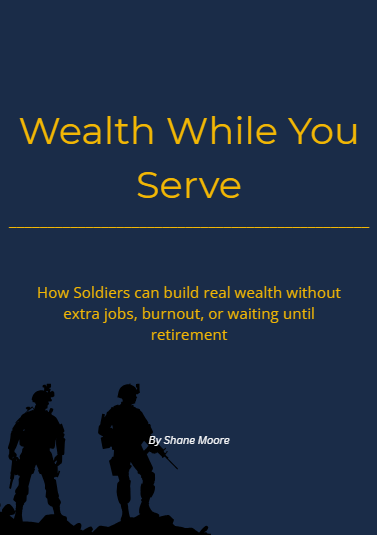
Ready to Start Building Wealth While You Serve?
Grab the free guide built for service members who want more than just survival mode. Whether you're in the barracks or deployed overseas, this is your first step toward real freedom.
Helping Soldiers Build Real Wealth While They Serve
We share practical tools, smart financial strategies, and military-friendly resources. Our goal is to help you stop just surviving and start building real freedom.

The information provided by Wealth While You Serve is for educational purposes only and does not constitute financial, legal, or tax advice. Always consult a qualified advisor before making financial decisions. Some links on this site are affiliate links, which means we may earn a small commission at no extra cost to you. This helps us continue offering free resources for military members and their families.
Created with ©systeme.io