
Why Warrant or Officer Paths Build Bigger Civilian Paychecks
Rank changes inside the Army often echo louder outside it

Disclosure:
This article is for educational purposes only and is not financial advice. Always do your own research or speak with a licensed advisor before making investment decisions.
Why Warrant and Officer Experience Signals Higher Civilian Value
These paths emphasize decision-making over task execution. Warrants and officers are trusted with judgment, not just compliance. That trust translates well to civilian roles that require autonomy. Employers pay more for people who can make decisions without constant supervision. Reduced supervision lowers organizational risk. Lower risk increases compensation.
Leadership scope expands dramatically in these roles. Managing people, resources, and outcomes becomes routine. Routine exposure builds confidence and clarity. Clarity improves communication. Communication matters more than technical skill at higher pay levels. Pay follows responsibility.
Technical depth or strategic oversight becomes more visible. Warrants often develop niche expertise. Officers often develop broad operational oversight. Both forms of experience translate cleanly to civilian structures. Clean translation reduces employer uncertainty. Reduced uncertainty increases offer strength.
Career progression signals adaptability and growth. Selection-based advancement demonstrates trust and performance. Employers recognize selective pipelines. Recognition elevates perceived value. Elevated value supports higher pay bands.
How These Paths Improve Post-Service Income Trajectory
Civilian roles align more naturally with warrant and officer functions. Titles like manager, director, engineer, or program lead mirror military responsibilities. Familiar alignment speeds hiring decisions. Faster decisions reduce income gaps. Smaller gaps preserve savings and momentum.
This progression aligns with the discipline behind the 56K Plan. Early career choices compound over time. Compounding applies to income as much as investments. Higher starting points matter. Small differences early widen over decades.
Negotiation leverage improves with authority-based experience. Decision authority signals readiness for responsibility. Responsibility commands higher compensation. Compensation supports stronger investing capacity. Investing capacity accelerates long-term wealth.
Career ceilings are often higher. Many civilian organizations cap growth based on leadership readiness. Warrant and officer backgrounds clear those barriers faster. Faster advancement increases lifetime earnings. Lifetime earnings shape freedom.
Why Career Path Choices Affect Long-Term Wealth
Higher income supports the $3 Million Timeline more easily. Increased earnings expand investable margin. Margin fuels compounding. Compounding does the heavy lifting over time.
Leadership experience reduces career volatility. Versatile leaders adapt across roles and industries. Adaptability protects income during change. Protected income preserves consistency.
Confidence improves when experience matches expectations. Clear alignment reduces imposter syndrome. Reduced doubt improves performance. Performance influences promotions and raises.
Freedom grows when income potential expands. Expanded income increases options. Options reduce pressure. Reduced pressure supports better decisions.
Practical ways to evaluate warrant or officer paths
Assess how your skills align with civilian leadership roles. Alignment clarifies value.
Consider long-term income trajectory, not just current pay. Trajectory matters more than speed.
Document decision-making authority and outcomes clearly. Outcomes translate well.
Plan education and credentials that support authority-based roles. Support strengthens leverage.
Final Word
Choosing a warrant or officer path is not just about rank inside the Army. It is about how experience translates after the uniform comes off. These paths build decision-making, leadership, and credibility that civilian employers pay for. That higher earning potential compounds over time when paired with discipline. The result is more options, less pressure, and stronger long-term outcomes. When career choices support income growth, freedom becomes easier to build while you serve and beyond.
Recommended Tools for Soldiers
🛡️ Insurance Hub – Protect higher future income and earning capacity.
📈 Investing Hub – Turn increased pay into long-term compounding early.
More to explore:
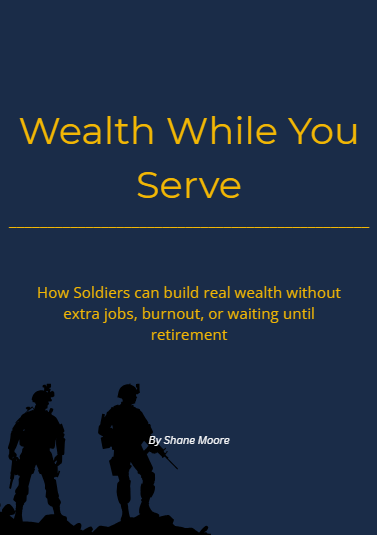
Ready to Start Building Wealth While You Serve?
Grab the free guide built for service members who want more than just survival mode. Whether you're in the barracks or deployed overseas, this is your first step toward real freedom.
Helping Soldiers Build Real Wealth While They Serve
We share practical tools, smart financial strategies, and military-friendly resources. Our goal is to help you stop just surviving and start building real freedom.

The information provided by Wealth While You Serve is for educational purposes only and does not constitute financial, legal, or tax advice. Always consult a qualified advisor before making financial decisions. Some links on this site are affiliate links, which means we may earn a small commission at no extra cost to you. This helps us continue offering free resources for military members and their families.
Created with ©systeme.io