
Why “Treat Yourself” Thinking Hurts Wealth in Uniform
Rewards without structure quietly steal momentum

Disclosure:
This article is for educational purposes only and is not financial advice. Always do your own research or speak with a licensed advisor before making investment decisions.
Why “Treat Yourself” Feels Deserved in Military Life
Military stress creates a strong urge for immediate relief. Long hours, rigid schedules, and constant demands wear people down. Spending feels like a fast way to reclaim control. That relief is real but temporary. Temporary relief often hides long-term costs. Costs appear later when motivation is lower.
The phrase reframes spending as self-care instead of consumption. Language matters more than most people realize. When spending is labeled as care, guilt disappears. Without guilt, guardrails drop. Dropped guardrails invite repetition. Repetition turns small treats into habits.
Pay cycles reinforce the reward loop. Soldiers often connect paydays with permission to spend. Permission becomes expectation. Expectations harden into routine. Routine spending removes intentionality. Unintentional spending is the enemy of progress.
Comparison normalizes frequent indulgence. Seeing peers spend freely makes restraint feel unnecessary. Normalized indulgence shifts baselines. Shifted baselines raise lifestyle floors. Raised floors squeeze future flexibility.
How “Treat Yourself” Thinking Undermines Progress
Rewards become disconnected from achievement. When every hard week earns a purchase, spending loses meaning. Meaningless rewards pile up quickly. Piled rewards strain cash flow. Strained cash flow interrupts systems.
This mindset directly competes with the 56K Plan. The plan depends on capturing surplus consistently. Frequent indulgence leaks surplus quietly. Quiet leaks are the hardest to detect. Undetected leaks compound damage.
Short-term comfort replaces long-term control. Control feels less exciting than comfort. Comfort wins when systems are weak. Strong systems reduce temptation. Weak systems invite it.
Spending decisions become emotional instead of strategic. Emotional decisions favor now over later. Later is where compounding lives. Sacrificing later repeatedly delays outcomes. Delays add up.
Why Discipline Beats Rewards Over Time
Avoiding indulgence protects the $3 Million Timeline. Compounding depends on uninterrupted inputs. Repeated indulgence interrupts inputs. Interruptions reduce long-term totals dramatically.
Discipline builds confidence that rewards never do. Confidence comes from keeping promises to yourself. Kept promises reinforce identity. Identity shapes behavior. Behavior compounds.
Intentional rewards feel better than impulse treats. Planned enjoyment removes regret. Regret poisons motivation. Clean enjoyment sustains momentum.
Freedom grows when spending is optional, not automatic. Optional spending preserves choice. Choice is leverage. Leverage creates calm.
Simple ways to replace “treat yourself” habits
Tie rewards to milestones, not emotions. Structure keeps rewards meaningful.
Delay purchases to test desire versus impulse. Time restores clarity.
Redirect small treats into visible progress. Progress motivates better than stuff.
Plan enjoyment inside the system. Planned rewards don’t break momentum.
Final Word
“Treat yourself” thinking feels harmless, especially in demanding environments. Over time, it quietly erodes consistency and delays outcomes. Soldiers who replace impulse rewards with intentional systems gain control instead of momentary comfort. Control compounds. Comfort fades. When rewards are planned and discipline is protected, momentum builds naturally. That momentum supports real freedom while you serve.
Recommended Tools for Soldiers
📈 Investing Hub – Turn would-be impulse spending into long-term leverage.
🪙 High-Yield Savings Hub – Park money safely while deciding intentionally.
More to explore:
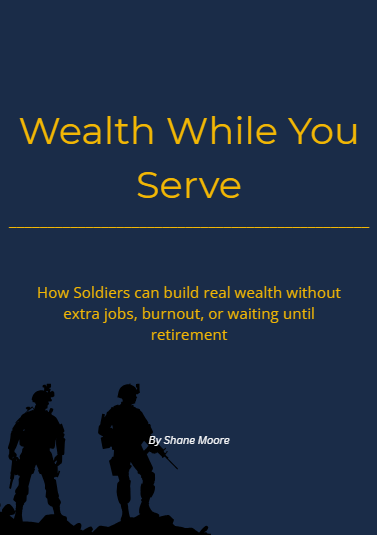
Ready to Start Building Wealth While You Serve?
Grab the free guide built for service members who want more than just survival mode. Whether you're in the barracks or deployed overseas, this is your first step toward real freedom.
Helping Soldiers Build Real Wealth While They Serve
We share practical tools, smart financial strategies, and military-friendly resources. Our goal is to help you stop just surviving and start building real freedom.

The information provided by Wealth While You Serve is for educational purposes only and does not constitute financial, legal, or tax advice. Always consult a qualified advisor before making financial decisions. Some links on this site are affiliate links, which means we may earn a small commission at no extra cost to you. This helps us continue offering free resources for military members and their families.
Created with ©systeme.io