
How to Translate Army Skills Into Civilian Careers
Your experience already has value. It just needs the right language.

Disclosure:
This article is for educational purposes only and is not financial advice. Always do your own research or speak with a licensed advisor before making investment decisions.
Why Army Skills Are Often Misunderstood by Civilian Employers
Military roles are described in internal language civilians do not use. Acronyms, ranks, and unit structures make sense inside the Army but not outside it. When resumes lean too heavily on that language, employers struggle to interpret value. Confusion leads to hesitation. Hesitation leads to rejection. Rejection is often about clarity, not capability.
Scope and responsibility are frequently understated. Soldiers tend to normalize responsibility because it feels routine. Managing people, equipment, and high-stakes decisions becomes “just the job.” Civilian employers do not automatically see that scale. Without translation, impact is hidden. Hidden impact lowers perceived value.
Leadership is assumed rather than explained. Many soldiers expect leadership to be obvious. Outside the military, leadership must be demonstrated explicitly. Employers want examples of influence, decision-making, and accountability. Without those examples, leadership is overlooked. Overlooked leadership reduces opportunity.
Results are rarely framed in business outcomes. The Army focuses on mission success. Civilian employers focus on efficiency, cost, risk, and performance. When outcomes are not reframed, alignment is missed. Missed alignment weakens positioning. Positioning matters during hiring.
How to Translate Skills in a Way Employers Understand
Focus on function, not title. Civilian employers care about what you did, not what you were called. Describing responsibilities in plain language builds understanding. Understanding builds confidence. Confidence improves interview outcomes. Outcomes determine offers.
This translation mindset supports the same discipline behind the 56K Plan. Early clarity compounds later results. Clear positioning reduces friction. Reduced friction speeds progress. Speed matters during transition.
Quantify impact whenever possible. Numbers anchor credibility. They show scale and responsibility. Scale demonstrates trust. Trust drives hiring decisions.
Align skills with business problems. Employers hire to solve issues. When skills are framed as solutions, relevance increases. Increased relevance improves leverage. Leverage improves compensation.
Why Skill Translation Protects Long-Term Wealth
Clear positioning supports the $3 Million Timeline. Faster placement and higher starting pay preserve compounding momentum. Momentum early has outsized impact. Delays are expensive even when short.
Higher alignment reduces career churn. Better role fit lowers burnout risk. Lower burnout improves longevity. Longevity stabilizes income.
Confidence improves negotiation outcomes. When value is clear, negotiation feels grounded. Grounded negotiation leads to better terms. Better terms compound over time.
Freedom grows when skills unlock options. Options reduce pressure. Reduced pressure improves decisions. Good decisions protect wealth.
Practical ways to convert military experience into civilian value
Rewrite bullets using plain language and outcomes. Clarity beats jargon.
Map each role to a civilian equivalent function. Function creates relevance.
Practice explaining experience without acronyms. Simplicity builds trust.
Get feedback from civilians in your target field. Outside perspective matters.
Final Word
Army skills translate well to civilian careers when they are explained clearly. The value is already there. It just needs the right framing. Soldiers who take the time to translate their experience earn faster trust and better offers. That early alignment protects momentum during transition. When skills are positioned correctly, freedom becomes easier to build while you serve and long after the uniform comes off.
Recommended Tools for Soldiers
📈 Investing Hub – Turn higher civilian income into long-term compounding quickly.
🪙 High-Yield Savings Hub – Hold transition cash safely while income stabilizes.
More to explore:
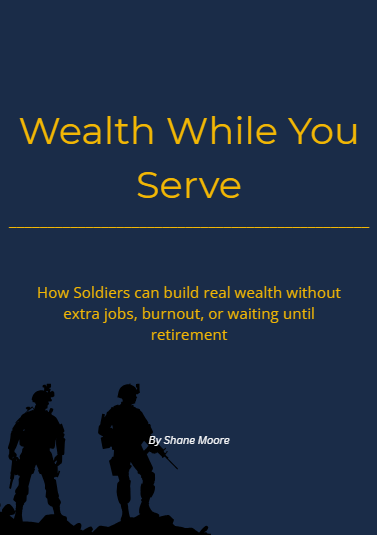
Ready to Start Building Wealth While You Serve?
Grab the free guide built for service members who want more than just survival mode. Whether you're in the barracks or deployed overseas, this is your first step toward real freedom.
Helping Soldiers Build Real Wealth While They Serve
We share practical tools, smart financial strategies, and military-friendly resources. Our goal is to help you stop just surviving and start building real freedom.

The information provided by Wealth While You Serve is for educational purposes only and does not constitute financial, legal, or tax advice. Always consult a qualified advisor before making financial decisions. Some links on this site are affiliate links, which means we may earn a small commission at no extra cost to you. This helps us continue offering free resources for military members and their families.
Created with ©systeme.io