
How to Avoid Subscription Overload in the Barracks
Small monthly leaks quietly slow long-term progress

Disclosure:
This article is for educational purposes only and is not financial advice. Always do your own research or speak with a licensed advisor before making investment decisions.
Subscriptions feel harmless because they spread pain over time
Most barracks subscriptions are small enough to avoid immediate attention. Individually, a streaming service or gaming subscription does not feel like a problem. The issue is that they rarely exist alone. Over time, multiple small charges stack into a meaningful monthly drain. Because no single charge feels painful, none get questioned. This slow accumulation quietly reduces available margin. Lost margin delays progress without creating urgency.
Recurring charges bypass the decision-making process entirely. One-time purchases require an active choice each time. Subscriptions do not. Once set up, they continue indefinitely unless deliberately stopped. This removes friction, and friction is often what protects money. Without friction, spending becomes automatic. Automatic spending is easy to ignore but hard to reverse.
Barracks life increases exposure to subscription-based spending. Limited space, limited transportation, and long downtime push soldiers toward digital convenience. Streaming, gaming, food delivery memberships, and software stack quickly. These subscriptions feel like small quality-of-life upgrades. Over time, they become fixed obligations. Fixed obligations reduce flexibility when money tightens.
Subscriptions distort how soldiers perceive their actual spending. Monthly costs fade into the background of checking accounts. Soldiers often remember big purchases but forget recurring ones. This creates a gap between perceived and actual spending. That gap makes budgeting feel confusing. Confusion leads to inaction.
Early wealth plans depend on controlling recurring leaks. The 56K Plan works by protecting margin early. Subscriptions quietly shrink that margin. Shrinking margin forces soldiers to “work harder” to see progress. Awareness turns leaks into leverage instead of obstacles.
Why subscription overload is so common in the barracks
Subscriptions feel cheaper than one-time purchases. Monthly pricing hides the true annual cost. Soldiers rarely multiply the number out. What feels like ten dollars becomes over a hundred without notice. That illusion keeps subscriptions alive longer than they should be. Awareness breaks the illusion.
Peer behavior normalizes excess subscriptions. When everyone has multiple services, it feels normal to do the same. Soldiers rarely discuss what they have canceled, only what they use. This creates silent pressure to keep everything active. Normal does not mean optimal. Following the crowd quietly slows progress.
Automatic billing creates set-it-and-forget-it spending. Charges hit accounts without interrupting daily routines. Because nothing breaks, nothing gets reviewed. Months pass without evaluation. By the time frustration appears, money has already leaked for years. Review needs to be intentional.
Downtime encourages convenience spending. Long evenings and weekends increase temptation. Subscriptions feel like harmless relief. Over time, relief turns into routine. Routine becomes obligation. Obligation limits flexibility later.
Lack of review allows accumulation indefinitely. Most soldiers never list their subscriptions in one place. Without visibility, nothing changes. Visibility is the first step to control. Control creates choice.
Reducing subscriptions strengthens long-term wealth systems
Lower fixed monthly costs immediately increase flexibility. Flexibility reduces stress during unexpected expenses. Stress reduction improves decision-making. Better decisions protect momentum. This effect shows up quickly once costs are lowered.
Freed cash can be redirected into structured systems. Money that was leaking monthly can now reinforce saving and investing habits. Systems benefit from consistency more than large deposits. Even small redirections compound when sustained. This reinforces discipline without extra effort.
Fewer subscriptions simplify financial management. Simplicity reduces cognitive load. Reduced load makes consistency easier. Easier systems survive PCS moves and busy seasons. Survival matters more than optimization.
Early margin protection supports the $3 Million Timeline. Small recurring leaks matter when compounded over decades. Protecting margin early has an outsized impact later. This is why recurring expenses deserve attention. What seems minor now multiplies over time.
Practical ways to control subscriptions
List every active subscription in one place.
Cancel anything unused in the last 30 days.
Replace multiple services with one option.
Review subscriptions quarterly.
Treat subscriptions as fixed bills, not background noise.
Final Word
Subscription overload rarely feels like a mistake in the moment. It feels like comfort, convenience, or a small reward after a long day. The problem is not any single subscription. It is the accumulation and the lack of review.
Soldiers who regain control here often feel immediate relief, not because they are deprived, but because they regain flexibility. Over time, that flexibility compounds into confidence. Confidence allows better decisions. Better decisions create freedom quietly, without extra effort.
Recommended Tools for Soldiers
💰 Budgeting Apps Hub Helps identify and track recurring expenses clearly.
🧠 Credit Monitoring Hub Ensures subscriptions are not quietly increasing balances.
More to explore:
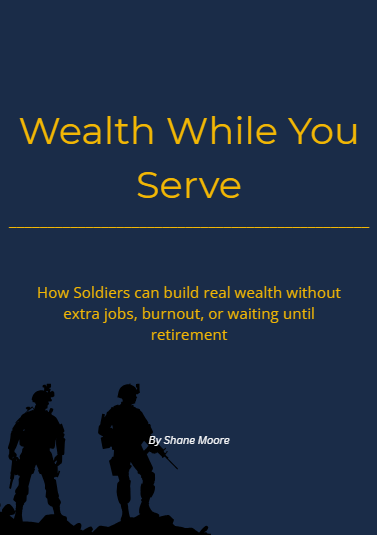
Ready to Start Building Wealth While You Serve?
Grab the free guide built for service members who want more than just survival mode. Whether you're in the barracks or deployed overseas, this is your first step toward real freedom.
Helping Soldiers Build Real Wealth While They Serve
We share practical tools, smart financial strategies, and military-friendly resources. Our goal is to help you stop just surviving and start building real freedom.

The information provided by Wealth While You Serve is for educational purposes only and does not constitute financial, legal, or tax advice. Always consult a qualified advisor before making financial decisions. Some links on this site are affiliate links, which means we may earn a small commission at no extra cost to you. This helps us continue offering free resources for military members and their families.
Created with ©systeme.io