
The Smart Way to Use Military Discounts for Travel
Military travel discounts feel like automatic savings, which means many soldiers stop thinking critically the moment they see the word “discount.”

Airlines advertise government fares. Hotels promote military rates. Because the label signals value, comparison shopping often ends prematurely. That premature decision-making is where small financial leaks begin.
A discount only works if it reduces a planned expense.
If it increases the trip, it increases the cost.
Disclosure:
This article is for educational purposes only and is not financial advice. Always do your own research or speak with a licensed advisor before making investment decisions.
Why Military Travel Discounts Can Quietly Increase Spending
The word “discount” lowers your resistance to spending. Seeing 10–20 percent off feels like winning because the brain registers perceived savings as a gain. That gain makes upgrades feel reasonable. Upgrades increase total spending beyond the original budget. This is where most soldiers drift without realizing it.
Government rates are not always the lowest rates available. Airlines and hotels price dynamically because demand shifts daily and regionally. Assuming the military rate is best removes comparison discipline. Removing discipline raises total trip cost across repeated trips. Repeated overpayments compound into meaningful lost margin over time.
Emotional timing amplifies travel spending. Leave, reunions, and post-deployment trips carry emotional weight because sacrifice creates urgency to reconnect. Emotional urgency increases spending tolerance. Increased tolerance weakens financial structure. Structure protects long-term wealth.
Rewards stacking can backfire when mismanaged. Travel credit cards can amplify value because points offset cost. But if balances are not paid in full, interest compounds against you immediately. Reverse compounding erases the benefit quickly and quietly.
Discounts magnify discipline.
Or magnify drift.
The Decision Framework Disciplined Soldiers Use
They define the full travel budget before searching. Setting a clear cap prevents emotional upgrades because boundaries exist before exposure to pricing. Boundaries reduce impulsive decisions. Reduced impulse preserves margin.
They compare at least three pricing paths every time. This includes military rates, public fares, and reward pricing because total cost determines value. Label-driven decisions feel efficient but often are not. Analytical comparison protects long-term cash flow.
They separate “deserved” from “funded.” Just because time off is earned does not mean spending is neutral because cash flow still matters. Treating travel as a financial decision instead of a reward preserves discipline. Discipline scales into larger money decisions.
They capture the savings difference intentionally. If comparison shopping saves $300, that amount is moved immediately into accounts from the 🪙 High-Yield Savings Hub so it cannot drift into lifestyle upgrades. Captured savings compound. Uncaptured savings disappear.
Strategy protects surplus.
Surplus builds freedom.
Hidden Patterns That Undermine Travel Discipline
Upgrading hotels because the rate feels “cheaper.”
Extending trips because airfare was discounted.
Booking premium seating “just this once.”
Financing travel through revolving balances instead of pre-funding.
These behaviors rarely feel reckless.
They simply feel normal.
That is why they compound.
Why This Matters Long Term
Discount discipline strengthens the 56K Plan foundation. Early wealth depends on eliminating recurring margin leaks because small preserved amounts accumulate into investable capital. Investable capital compounds the longest.
Controlled travel spending supports the $3 Million Timeline trajectory. Long-term compounding requires steady contributions because capital must remain deployed instead of funding impulsive upgrades. Deployment of capital determines exponential growth.
Intentional spending reinforces identity. When you treat discounts as efficiency tools instead of spending permission, you reinforce disciplined behavior because identity shapes long-term financial outcomes. Outcomes compound across decades.
Margin preservation increases optionality. Optionality grows when lifestyle remains controlled because financial stress decreases and flexibility increases. Flexibility strengthens freedom.
Travel is not the threat.
Uncontrolled upgrades are.
Practical ways to maximize military travel discounts strategically
Pre-commit to a percentage allocation before booking. Decide in advance that 20–30 percent of any travel savings will be invested because pre-allocation removes emotional decision-making after booking. Removing post-purchase decisions prevents drift.
Apply a 48-hour delay rule for non-essential upgrades. If you feel tempted to upgrade seats or extend stays, wait 48 hours because urgency often fades under time pressure. Time reduces emotional spending and restores clarity.
Automatically transfer saved amounts into growth vehicles. When a discount reduces total cost, schedule an immediate transfer into investment platforms from the 📈 Investing Hub so savings never become lifestyle drift. Automation removes temptation and preserves compounding.
Treat discounts as efficiency gains, not spending permission. Remind yourself that this is a strategic move because identity-driven behavior compounds across decisions. Compounded discipline defines long-term outcomes.
This is not about travel.
It is about margin capture.
Final Word
Military discounts are leverage.
Leverage must be aimed.
If you use them to reduce planned expenses, they accelerate wealth. If you use them to justify upgrades, they slow compounding. The difference is not the discount.
It is discipline.
Capture the difference.
Protect the margin.
Build wealth while you serve.
Recommended Tools for Soldiers
💳 Credit Cards Hub – Compare military-friendly travel rewards cards and understand how to stack points responsibly without carrying balances.
🪙 High-Yield Savings Hub – Store captured travel savings in accounts that preserve yield instead of letting them drift into everyday spending.
More to explore:
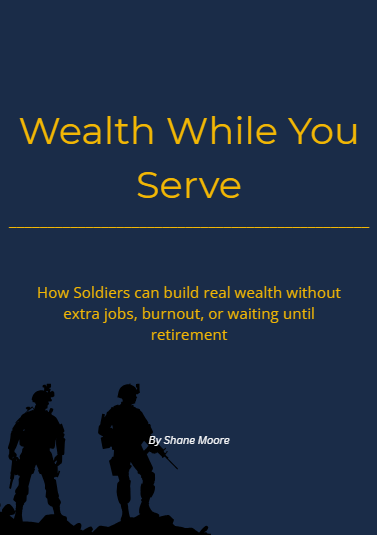
Ready to Start Building Wealth While You Serve?
Grab the free guide built for service members who want more than just survival mode. Whether you're in the barracks or deployed overseas, this is your first step toward real freedom.
Helping Soldiers Build Real Wealth While They Serve
We share practical tools, smart financial strategies, and military-friendly resources. Our goal is to help you stop just surviving and start building real freedom.

The information provided by Wealth While You Serve is for educational purposes only and does not constitute financial, legal, or tax advice. Always consult a qualified advisor before making financial decisions. Some links on this site are affiliate links, which means we may earn a small commission at no extra cost to you. This helps us continue offering free resources for military members and their families.
Created with ©systeme.io