
Why Saving Before Transition Is More Important Than Planning After
Preparation beats panic every time.

Disclosure:
This article is for educational purposes only and is not financial advice. Always do your own research or speak with a licensed advisor before making investment decisions.
Understand the Real Power of the GI Bill
Planning without saving is like mapping without fuel. You can’t drive opportunity without resources. Most soldiers wait until the final months before ETS to “get serious,” losing years of compounding and momentum.
Saving early gives you freedom of choice. A growing cash cushion lets you take the right job, not just the first one. It’s the difference between control and compromise.
Your plan only works if money supports it. Vision boards, resumes, and timelines don’t replace a bank account. Early savings are your launchpad to civilian success.
Use Active Duty Benefits to Build the Cushion
Leverage BAH, BAS, and tax-free allowances. Every dollar saved from these benefits during your final years adds safety to your exit. The 56K Plan proves that even small, consistent savings create massive breathing room.
Take advantage of special pays and bonuses. Deployment or reenlistment money can easily fund a full emergency reserve when managed wisely.
Invest excess income while you still have predictable pay. Stable earnings make it the perfect time to build the habits that feed your 3 Million Timeline.
Build a Financial Buffer That Covers Real Transition Time
Calculate six months of living costs. Cover housing, transportation, insurance, and job-hunting expenses. Knowing that number gives clarity instead of guesswork.
Keep savings accessible but separate. A high-yield savings account gives security without the temptation to spend it early.
Plan for delays in benefits. VA processing, job onboarding, or relocation can all take longer than expected. Your savings bridge those gaps.
Turn Your Early Savings Into Long-Term Advantage
Use post-separation income to replenish what you spent. This keeps your cushion strong while you adapt to civilian pay cycles.
Invest leftover funds strategically. Once stability returns, redirect unused savings into index funds or IRAs to stay aligned with your freedom plan.
Stay disciplined once you’re out. The habits you build while serving determine whether your transition stays stable or stressful.
Final Word
The soldiers who save early don’t fear transition, they look forward to it. Build your cushion now, trust your system, and carry your discipline into civilian life with confidence.
Recommended Tools for Soldiers
👉 Banking Hub – open a dedicated ETS savings account and automate transfers.
👉 Investing Hub – continue long-term contributions while building short-term reserves.
More to explore:
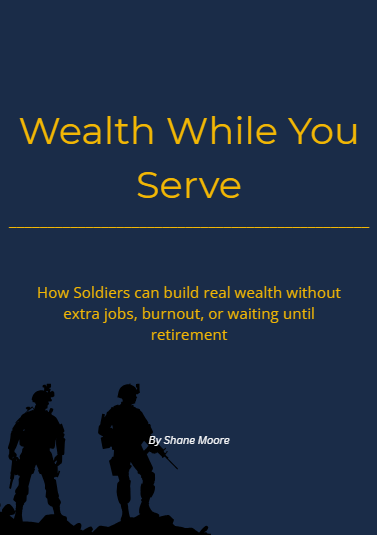
Ready to Start Building Wealth While You Serve?
Grab the free guide built for service members who want more than just survival mode. Whether you're in the barracks or deployed overseas, this is your first step toward real freedom.
Helping Soldiers Build Real Wealth While They Serve
We share practical tools, smart financial strategies, and military-friendly resources. Our goal is to help you stop just surviving and start building real freedom.

The information provided by Wealth While You Serve is for educational purposes only and does not constitute financial, legal, or tax advice. Always consult a qualified advisor before making financial decisions. Some links on this site are affiliate links, which means we may earn a small commission at no extra cost to you. This helps us continue offering free resources for military members and their families.
Created with ©systeme.io