
How to Create a Realistic Budget That Actually Works in the Army
A budget must work on your worst military week, not just your best one.

Disclosure:
This article is for educational purposes only and is not financial advice. Always do your own research or speak with a licensed advisor before making investment decisions.
Why Most Budgets Fail Soldiers
Traditional budgets assume predictable routines, which the military rarely provides. Soldiers deal with field exercises, unexpected missions, duty days, and irregular hours. A rigid civilian-style budget collapses under this pressure. Budgeting must adapt to unpredictable weeks or it will fail the moment life gets chaotic. A realistic budget respects the lifestyle it is built for.
Budgets fail when they require daily manual tracking. Soldiers already manage countless decisions and responsibilities. When a budget adds more tasks instead of removing them, discipline disappears. A sustainable budget must reduce mental load, not increase it.
Most budgets ignore emotional spending triggers unique to the barracks and unit life. Stress, boredom, and peer habits create predictable spending spikes. A budget that ignores psychology sets soldiers up to fail. Real systems acknowledge and anticipate behavior.
Budgets fall apart when they aim for perfection instead of consistency. Soldiers often start too strict, then abandon the whole system when one mistake happens. A useful budget builds flexibility and forgiveness into its design. Progress matters more than perfection.
The 56K Plan works because it uses structure without demanding perfect behavior. Realistic systems survive real life, and a budget must do the same.
What a Realistic Military Budget Actually Looks Like
It separates fixed and flexible expenses clearly. Housing, phone, insurance, and car payments stay stable, while food, entertainment, and barracks extras shift. Separating these categories prevents panic when flexible spending fluctuates. It removes guilt and builds clarity.
It uses spending ranges instead of rigid dollar amounts. Soldiers need room to adapt during busy weeks. A range provides structure without suffocation. This approach builds consistency because it respects reality.
It includes a buffer for unpredictable costs. Field gear, short-notice travel, uniform items, or unit expectations always surface. A budget with no margin breaks quickly. Planning for uncertainty creates a stronger foundation.
It relies on automation to manage savings and investing. Automation ensures progress even when your schedule is full. When money moves before you can touch it, discipline becomes easier.
It integrates long-term goals like the 3 Million Timeline into small monthly habits. A realistic budget aligns short-term spending with long-term freedom.
How to Build a Budget That Survives Real Army Life
Start with a simple layout that does not overwhelm you. Keep your categories small, direct, and easy to monitor. Complexity leads to burnout. Simplicity leads to consistency.
Analyze one month of spending to create a baseline. You cannot build a realistic plan from guesses. Reviewing actual behavior creates clarity and removes shame. Awareness builds power.
Include intentional spending for enjoyment. A budget that ignores fun is a budget that will die fast. Soldiers need healthy outlets. Planning for enjoyment prevents binge spending later.
Review your budget weekly for five minutes. A short routine maintains awareness without draining energy. Consistency keeps the system alive.
Adjust your categories every quarter as your responsibilities shift. Flexibility allows your budget to evolve with your career. A strong budget grows alongside you.
Why a Realistic Budget Strengthens Your Future
It reduces stress and restores control. Confidence grows naturally.
It builds predictable habits that make saving easier. Habit strengthens identity.
It protects you from barracks impulse spending. Protection preserves progress.
It creates financial stability long before you reach higher rank. Stability builds freedom.
It supports the long-term movement toward the 56K Plan. Structure drives results.
Final Word
A realistic budget does not demand perfection. It demands honesty, structure, and flexibility. When you build a budget that respects the reality of Army life, you create a system that supports consistency and long-term freedom.
Recommended Tools for Soldiers
🪙 High Yield Savings Hub – store buffer money where it grows while staying accessible.
🏦 Banks Hub – organize spending accounts to keep your budget simple and effective.
More to explore:
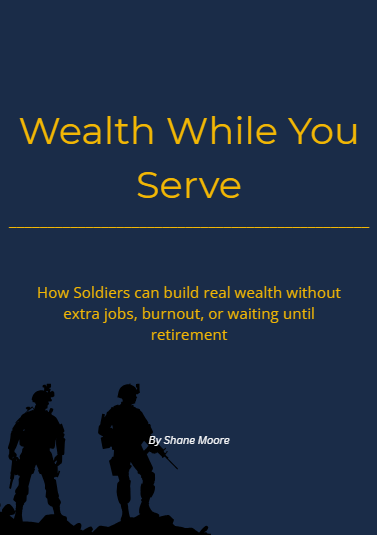
Ready to Start Building Wealth While You Serve?
Grab the free guide built for service members who want more than just survival mode. Whether you're in the barracks or deployed overseas, this is your first step toward real freedom.
Helping Soldiers Build Real Wealth While They Serve
We share practical tools, smart financial strategies, and military-friendly resources. Our goal is to help you stop just surviving and start building real freedom.

The information provided by Wealth While You Serve is for educational purposes only and does not constitute financial, legal, or tax advice. Always consult a qualified advisor before making financial decisions. Some links on this site are affiliate links, which means we may earn a small commission at no extra cost to you. This helps us continue offering free resources for military members and their families.
Created with ©systeme.io