
Best Ways to Handle Large Purchases as a Soldier
Make big decisions without slowing your long-term progress

Large purchases are where most financial plans break down. Not because soldiers do not earn enough, but because big decisions carry more emotion, more pressure, and more justification than smaller ones.
A single decision can undo months of discipline if it is not handled correctly. That is why large purchases are not just about what you buy. They are about how you decide.
Disclosure:
This article is for educational purposes only and is not financial advice. Always do your own research or speak with a licensed advisor before making investment decisions.
Why Big Purchases Create Financial Setbacks
Emotion drives the decision. Large purchases usually come with a strong emotional pull, especially after deployments, training cycles, or long periods of discipline. That emotion makes it easier to justify spending more than planned. When justification replaces logic, costs increase quickly. Those decisions feel right in the moment. But over time, they create friction in your system.
Higher price lowers resistance. It sounds backwards, but once you accept a large purchase, adding more to it becomes easier. Upgrades, add-ons, and better versions start to feel small compared to the total. That mindset increases total cost without much thought. Small additions compound into large increases. That is where most overspending happens.
Lack of structure leads to impulse decisions. Without a defined process, decisions happen quickly based on timing or availability. Quick decisions reduce evaluation. Reduced evaluation increases risk. Risk leads to poor outcomes. Structure prevents that chain from happening.
Future impact gets ignored. When focusing on the purchase itself, it is easy to ignore how it affects your system over time. Payments, reduced savings, and lost investment opportunities all matter. Those effects are not immediate. But they compound over time. That is where the real cost shows up.
How to Approach Large Purchases the Right Way
Slow the decision down. Time is one of the most powerful tools you have. When you delay a large purchase, emotion fades and clarity improves. Better clarity leads to better decisions. Most unnecessary purchases lose their appeal with time. That is why delay works.
Set a clear limit before you shop. Knowing your maximum before you start removes guesswork. Without a limit, the decision expands as you look at options. Expansion increases cost. A defined cap keeps the decision controlled. Control protects your system.
Evaluate the full system impact. Every large purchase affects your savings, investing, and flexibility. Looking at the full picture changes how the decision feels. It shifts the focus from the item to the outcome. That shift improves discipline. Discipline improves results.
Track the decision using tools from the 💰 Budgeting Apps Hub so that you can see how the purchase fits into your overall plan instead of evaluating it in isolation Visibility creates awareness. Awareness improves control. Control leads to better execution.
Mistakes That Cost Soldiers the Most
Making decisions too quickly without evaluation
Letting upgrades increase the total cost without realizing it
Ignoring long-term impact in favor of short-term satisfaction
Financing purchases without understanding the full cost
These are common.
And they are expensive.
How These Decisions Shape Your Financial Future
Controlling large purchases protects your foundation. The 56K Plan depends on consistency in your early years. Large, unplanned expenses break that consistency. When consistency drops, progress slows. That is where small setbacks become long-term delays.
Reducing unnecessary spending supports compounding. The $3 Million Timeline is built on keeping your money invested and growing over time. Every large purchase that pulls money out of your system reduces that growth. That reduction compounds over time. Protecting your capital matters.
Discipline scales across decisions. How you handle one large purchase influences how you handle the next. Strong decisions build strong habits. Those habits create better long-term outcomes. This is where systems are built.
Maintaining flexibility keeps you in control. Large purchases reduce your options if they are not planned properly. Reduced options increase stress. Increased stress leads to reactive decisions. Staying flexible improves long-term stability.
Practical ways to stay in control of big decisions
Use a 48-hour rule before committing. This is a friction control strategy that reduces impulse decisions and improves clarity. Most emotional purchases lose strength with time. That protects your system.
Pre-define your budget and stick to it. This is a pre-commitment strategy that prevents decision creep. When the number is set, the decision becomes easier. Boundaries create discipline.
Pay attention to total cost, not monthly payments. This is a non-obvious optimization that shifts focus to what actually matters. Monthly payments hide the real impact. Total cost reveals it.
Keep large purchases aligned with your goals. This is an identity reinforcement strategy that ensures your actions match what you are building. Alignment improves consistency. Consistency drives results.
Final Word
Large purchases are not the problem. The way you approach them is what determines whether they move you forward or hold you back.
Most soldiers focus on whether they can afford something right now. The better question is how that decision affects everything else in your system over time.
If you slow down, set limits, and stay aligned with your goals, large purchases become controlled decisions instead of financial setbacks.
Recommended Tools for Soldiers
🪙 High-Yield Savings Hub – Build reserves so large purchases don’t disrupt your financial system.
💳 Credit Cards Hub – Use credit strategically when appropriate without creating long-term financial damage.
More to explore:
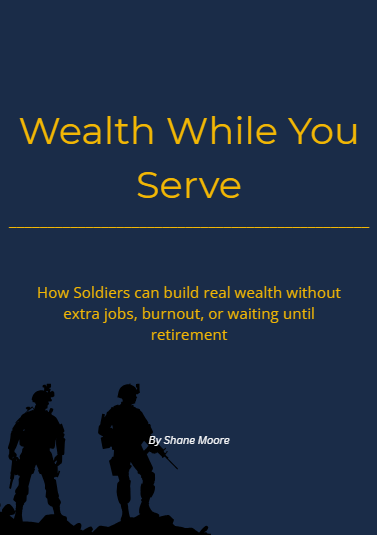
Ready to Start Building Wealth While You Serve?
Grab the free guide built for service members who want more than just survival mode. Whether you're in the barracks or deployed overseas, this is your first step toward real freedom.
Helping Soldiers Build Real Wealth While They Serve
We share practical tools, smart financial strategies, and military-friendly resources. Our goal is to help you stop just surviving and start building real freedom.

The information provided by Wealth While You Serve is for educational purposes only and does not constitute financial, legal, or tax advice. Always consult a qualified advisor before making financial decisions. Some links on this site are affiliate links, which means we may earn a small commission at no extra cost to you. This helps us continue offering free resources for military members and their families.
Created with ©systeme.io