
How to Build a Family Budget That Survives PCS Moves
Flexibility matters more than precision in military life

Disclosure:
This article is for educational purposes only and is not financial advice. Always do your own research or speak with a licensed advisor before making investment decisions.
Why PCS Moves Break So Many Family Budgets
PCS moves introduce multiple financial unknowns at once. Housing costs, utilities, commuting, and local prices can all change simultaneously. When too many variables shift at once, rigid budgets fail. Families try to force old numbers into new realities. That mismatch creates frustration and overspending. Overspending feels unavoidable when the budget no longer fits reality.
Temporary overlap expenses catch families off guard. Deposits, temporary lodging, storage, and travel often stack together. These costs feel temporary, so they are rarely planned thoroughly. Unplanned stacking stresses cash flow. Cash flow stress leads to reactive decisions. Reactive decisions usually cost more.
Income timing and reimbursements create short-term strain. Allowances and reimbursements do not always align perfectly. Delays feel stressful even when money is eventually returned. Stress causes families to lean on credit unnecessarily. Credit adds long-term cost to short-term problems.
Emotional fatigue reduces financial discipline. PCS moves are exhausting mentally and physically. Exhaustion lowers patience and attention. Lower attention increases mistakes. Mistakes compound quickly during transitions.
How to Design a Budget That Adapts Through PCS Moves
Budgets must be built around ranges, not fixed numbers. Ranges allow flexibility when costs shift. Flexibility reduces stress. Reduced stress improves decision-making. Better decisions protect momentum.
This approach reinforces the 56K Plan during unstable periods. The plan is built on consistency, not perfection. A flexible budget preserves consistency through change. Preserved consistency keeps systems intact. Intact systems compound.
Separating core expenses from transitional costs creates clarity. PCS costs are temporary but real. Treating them as a separate category prevents distortion. Distortion hides progress. Clarity maintains confidence.
Planning buffers ahead of PCS moves absorbs shocks. Buffers turn emergencies into inconveniences. Inconveniences are manageable. Manageable situations protect discipline. Discipline preserves growth.
Why PCS-Proof Budgets Support Long-Term Freedom
Stable budgeting protects the $3 Million Timeline indirectly. Disrupted budgets interrupt investing and saving. Continuity preserves compounding. Compounding rewards stability over time.
Adaptable budgets reduce financial anxiety. Anxiety rises when money feels fragile. Resilient systems feel strong. Strength builds confidence. Confidence supports long-term follow-through.
Families who budget well through moves recover faster. Faster recovery prevents long-term setbacks. Setbacks cost time. Time is the most valuable financial asset.
Freedom grows when transitions do not derail progress. Military life guarantees transitions. Systems that survive transitions build options. Options define freedom.
Practical ways to PCS-proof your family budget
Build a PCS buffer months in advance. Buffers soften transitions.
Use spending ranges instead of fixed caps. Flexibility prevents breakage.
Track transitional costs separately. Separation maintains clarity.
Resume normal systems immediately after arrival. Recovery speed matters.
Final Word
PCS moves are unavoidable, but financial chaos is not. Families who build flexible budgets survive transitions without sacrificing progress. Planning for change is not pessimistic. It is practical. When systems bend instead of break, momentum stays intact. That resilience allows military families to keep building freedom while they serve.
Recommended Tools for Soldiers
💰 Budgeting Apps Hub – Adjust categories quickly as costs change between duty stations.
🛡️ Insurance Hub – Protect your family during moves when risk temporarily increases.
More to explore:
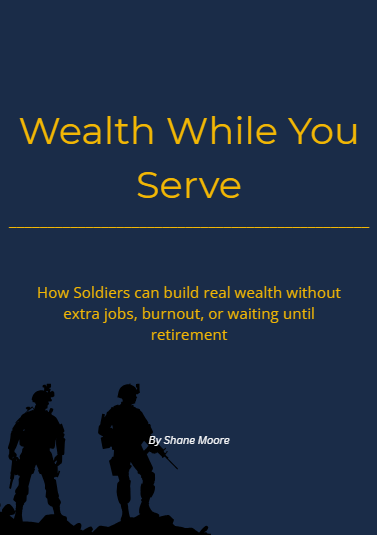
Ready to Start Building Wealth While You Serve?
Grab the free guide built for service members who want more than just survival mode. Whether you're in the barracks or deployed overseas, this is your first step toward real freedom.
Helping Soldiers Build Real Wealth While They Serve
We share practical tools, smart financial strategies, and military-friendly resources. Our goal is to help you stop just surviving and start building real freedom.

The information provided by Wealth While You Serve is for educational purposes only and does not constitute financial, legal, or tax advice. Always consult a qualified advisor before making financial decisions. Some links on this site are affiliate links, which means we may earn a small commission at no extra cost to you. This helps us continue offering free resources for military members and their families.
Created with ©systeme.io