
Should You Use Credit Cards to Pay Bills in the Army
Used correctly, this can strengthen your system. Used wrong, it creates long-term problems

Using a credit card to pay your bills sounds like a smart move.
You earn rewards, build credit, and keep your cash longer.
But like most financial tools, the benefit depends entirely on how you use it. Without structure, this approach can quietly create debt and reduce your long-term progress.
Disclosure:
This article is for educational purposes only and is not financial advice. Always do your own research or speak with a licensed advisor before making investment decisions.
Why Using Credit Cards for Bills Feels Like a Good Idea
Rewards make spending feel productive. Getting points, cash back, or travel benefits for bills you already have seems like a win. That framing makes the decision feel efficient. But rewards are small compared to interest costs if balances are carried. The benefit only exists if the system is controlled.
It keeps cash in your account longer. Paying with a credit card delays when your money actually leaves your account. That flexibility can feel like increased control. But without discipline, delayed payments can lead to overspending. Timing differences do not change total cost.
It builds credit history consistently. Regular bill payments create consistent activity on your credit profile. That activity strengthens your payment history. Strong payment history improves your score over time. But missed payments or high balances reverse that benefit quickly.
It simplifies tracking when structured properly. Consolidating bills onto one card can make tracking easier. But without a clear system, it can also hide spending patterns. Clarity depends on how well the system is managed.
When This Strategy Actually Works in Your Favor
You pay the full balance every month without exception. This is the foundation of the strategy. Carrying a balance eliminates the benefit of rewards. Full payments keep the system clean. Consistency here is non-negotiable.
Your bills are already planned and budgeted. Using a card for planned expenses keeps spending controlled. It prevents the card from becoming a source of new spending. That separation matters.
You track usage and timing carefully. Knowing when your statement closes and when payments are due improves your control. Timing affects utilization. Utilization affects your credit profile.
Using insights from the 💰 Budgeting Apps Hub helps you clearly map which bills are going onto your card so that nothing is overlooked and everything stays aligned with your plan Visibility prevents drift. Clear mapping improves consistency. That keeps the system working.
Where This Strategy Starts to Break Down
Treating available credit as extra income
Carrying balances while chasing rewards
Losing track of due dates and statement cycles
Letting spending expand because it feels easier
These are common.
And they remove the advantage completely.
How This Impacts Your Long-Term Financial Position
Controlled usage supports early momentum. The 56K Plan benefits from disciplined spending and consistent saving. Using credit cards correctly can support that structure. Misuse slows it down.
Interest works against long-term growth. The $3 Million Timeline depends on money staying invested and compounding. Interest payments redirect that money away from your system. That shift matters over time.
Strong habits create stronger systems. Using credit intentionally builds discipline. That discipline carries into investing and saving decisions. That connection is where long-term growth happens.
Mistakes compound faster than rewards. Rewards are incremental. Mistakes are exponential. That imbalance is important to understand before using this strategy.
Practical ways to use credit cards for bills without creating risk
Only put fixed, predictable bills on your card. This is a control strategy that keeps your spending stable. Predictability reduces risk. That stability supports consistency.
Set up automatic full payments every month. This is an automation strategy that removes the chance of missed payments. Removing risk improves long-term outcomes.
Keep your utilization below your comfort level. This is a margin strategy that protects your credit profile. Lower usage improves your position.
Monitor your accounts using tools from the 🧠 Credit Monitoring Hub so you can quickly identify changes in your credit profile and correct issues before they grow into larger problems Awareness improves response time. Faster response reduces impact.
Final Word
Using credit cards to pay bills can be a smart move, but only if it fits inside a disciplined system. The benefits come from consistency, not from the card itself, and most of the risk comes from losing control of spending or carrying balances.
If you treat your card as a tool for planned expenses, pay it off in full every month, and stay aware of how it fits into your overall system, it can support both your credit and your long-term progress. But if you rely on it without structure, it quietly works against everything you are trying to build.
Recommended Tools for Soldiers
💳 Credit Cards Hub – Choose cards that maximize rewards while supporting disciplined, controlled usage.
🏦 Banks Hub – Manage your cash flow and ensure your system supports full, on-time payments every month.
More to explore:
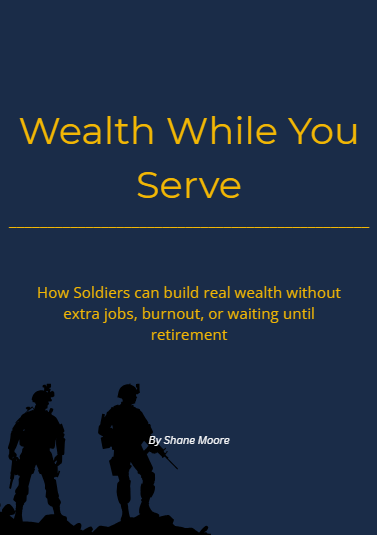
Ready to Start Building Wealth While You Serve?
Grab the free guide built for service members who want more than just survival mode. Whether you're in the barracks or deployed overseas, this is your first step toward real freedom.
Helping Soldiers Build Real Wealth While They Serve
We share practical tools, smart financial strategies, and military-friendly resources. Our goal is to help you stop just surviving and start building real freedom.

The information provided by Wealth While You Serve is for educational purposes only and does not constitute financial, legal, or tax advice. Always consult a qualified advisor before making financial decisions. Some links on this site are affiliate links, which means we may earn a small commission at no extra cost to you. This helps us continue offering free resources for military members and their families.
Created with ©systeme.io